
No rules, no tracking, no guilt. Just the habits that genuinely support energy, strength and long-term health.
I Have a Confession to Make
I turned 40 and suddenly I couldn’t stop craving sugar. Not occasionally – I wanted sweet food constantly. And the more I gave in to it, the worse it got.
You probably know the spiral. One sweet snack leads to a full bag of snacks that turn into an energy crash. The crash brings fatigue. Fatigue kills the motivation to exercise. Less movement means worse sleep. Poor sleep leads to more cravings, more inflammation, achy joints – and back to the beginning. For me, a 45 year old woman in perimenopause, that cycle felt almost impossible to break.
A few weeks ago, inspired by research I came across through the ZOE Science & Nutrition podcast, I started a 30-day no-added-sugar challenge. It’s nearly completed, but I will keep going. Because I feel genuinely great! No cravings. Steady energy. I actually want to work out in the morning. I’ve not felt that alive in years.
“No added sugar” doesn’t mean what you might think. I still eat plenty of carbohydrates – fruit, wholegrains, vegetables. I simply cut out confectionery, biscuits, honey and jam, dried fruit, chocolate and processed foods with added sugar. And I don’t obsess. If I make a bowl of beautiful black rice salad with pomegranate, feta, rucola, roasted almonds and a dressing that calls for a tablespoon of maple syrup? I make the dressing. Life is too short for joyless eating.
That’s what this post is about. No strict rules. No restriction. Six realistic habits – and the science that explains why they work.
Why Your 40s Change the Rules
Before we get to habits, one important thing to understand: your body hasn’t failed you. It’s changed – and there’s a difference.
During perimenopause, declining oestrogen affects blood sugar regulation, fat storage, muscle maintenance and sleep quality. A ZOE PREDICT study found that post-menopausal women had measurably higher fasting blood glucose, more blood sugar variability and higher inflammation markers than pre-menopausal women of the same age – and that higher sugar intake and poor sleep were both key contributors.
The most common response? Eat less, exercise more. Right? But it almost always backfires. Cutting calories in midlife often means cutting the very nutrients your body needs most. What works instead is shifting the quality of what you eat – and building habits that genuinely stick.
Here are six that make the biggest difference.
Habit 1: Eat the Mediterranean Way – Adapted for Where You Live
Mediterranean Diet Science Background
The Mediterranean diet is the most studied way of eating in the world. A 2024 systematic review in AIMS Public Health found that women following it in menopause had lower body weight, better metabolic markers, reduced cardiovascular risk and fewer symptoms. A large JAMA Network Open study the same year found around 23% lower all-cause mortality – with inflammation as a key factor.
Mediterranean diet it’s not a diet in the modern sense. No phases or forbidden foods. Just: lots of vegetables and legumes, whole grains, olive oil, nuts and seeds daily, fish when you can, moderate dairy, poultry regularly, red meat occasionally.
And if you live somewhere landlocked?
For those of us in Switzerland and anywhere else far away from the sea: yes, fish is wonderful – aim for 1-2 portions a week, but don’t stress if that’s a stretch. The real protein backbone of this way of eating is perfectly accessible anywhere:
- Legumes – lentils, chickpeas, beans, edamame
- Dairy, especially fermented – kefir, natural yoghurt, buttermilk, feta, mozzarella, goat cheese, quark
- Nuts and seeds – daily, they are so good for you!
- Soy products – tofu, tempeh, miso, soy milk
- Poultry – chicken and turkey regularly
- Quality red meat – occasionally, not never
Start here: Swap one meal this week to be fully Mediterranean – a lentil soup with good olive oil and wholegrain bread, a grain bowl with roasted vegetables and feta, or a simple fish fillet with vegetables. Notice how full and satisfied you feel compared to a carb-heavy meal eaten alone.
Habit 2: Eat More Plants – and Make It a Game
The science on plant food diversity is compelling: eating a wide variety of plant foods supports long-term energy, reduces inflammation and improves overall health. “Plants” means everything – vegetables, fruit, wholegrains, legumes, nuts, seeds, herbs, spices, plant oils. It all counts.
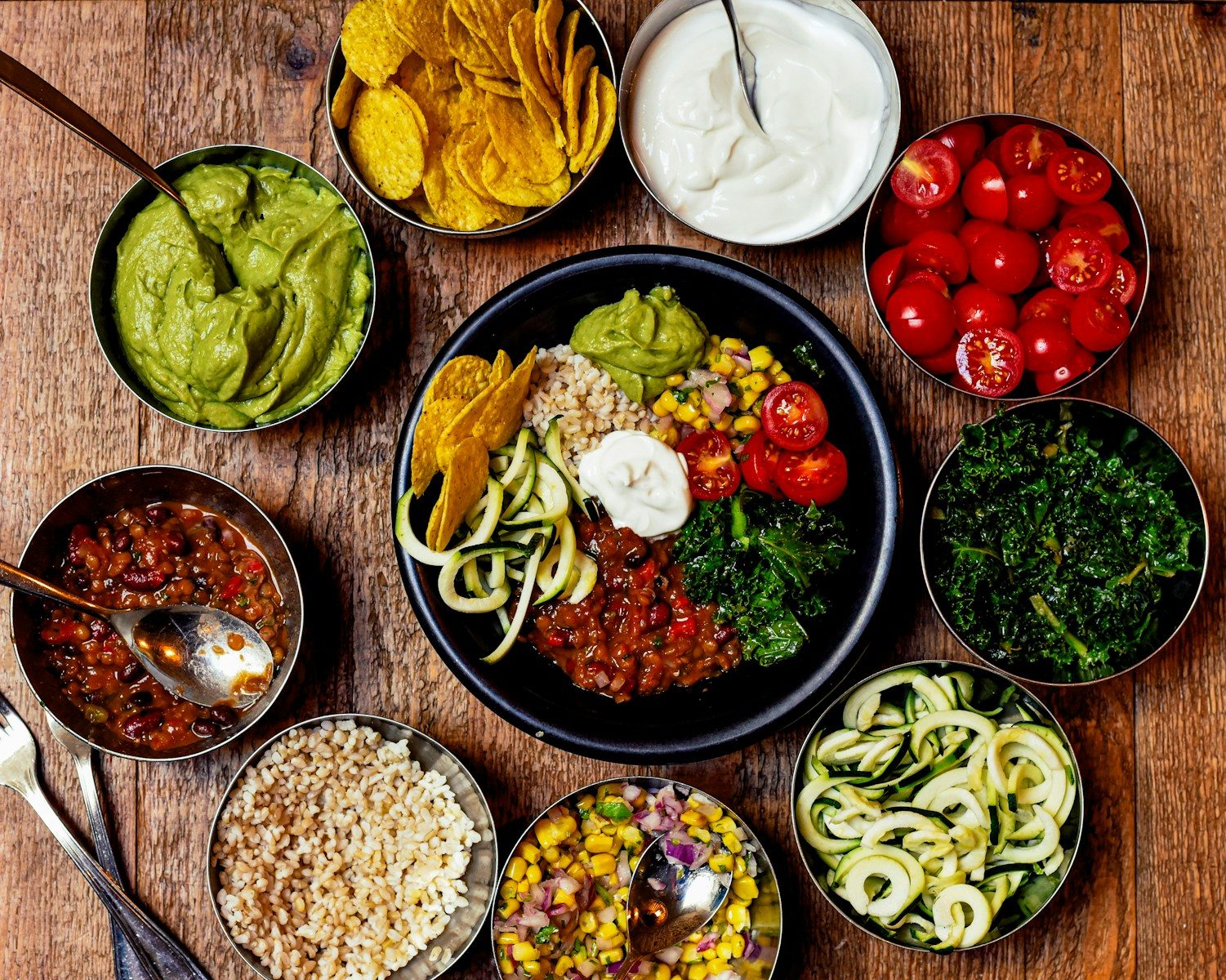
Rather than a weekly target that sounds like homework, I like to give my clients a one-day challenge: can you eat 15 different plants in a single day?
Impossible? Try it! You’ll be amazed. More importantly, once you’ve done it once, something shifts. Adding a handful of seeds to breakfast or a fresh herb to a salad becomes almost automatic. That rewiring of attention is worth more than any meal plan.
Here’s what one of my own completely normal days looks like:
Breakfast: Oats + soy milk + sesame, linseed, pumpkin, chia seeds + almonds + ground ginger + cinnamon + blueberries → 10 plants
Lunch: Wholegrain bread + smoked salmon + poached egg + rucola + pine nuts + olive oil & balsamic dressing → 4 plants
Dinner: Green Thai curry with brown/ black rice: curry paste, garlic, ginger, coconut milk, aubergine, carrot, sugarsnaps, red pepper, bamboo shoots, green beans, tofu, chilli, Thai basil, rice → 13 plants
Total: 27 – before I even reach for the apple or nuts on the counter.
Family tip:
We play “Count All the Plants on Your Plate” game with my two boys (8 & 11). They’ve no idea it’s healthy eating – it’s just a fun challenge.
“Is there garlic? Does olive oil count? Mummy, what’s that green thing?”
They’ve learned to name herbs, spices, grains and seeds, know plants matter and see how much variety goes into a home-cooked meal. No “eat your vegetables.” Just fun. Try it at dinner tonight. You might be surprised who wins.
Habit 3: Reshuffle Your Plate – and Move After Meals
Blood sugar balance is, in my opinion, the single most underestimated factor in how women feel in midlife. The most frustrating thing is that we unknowingly make it worse with the way we eat. Not because we’re eating badly, but because of what we eat first, and what we eat alone.
Here’s what happens.
You eat a meal that’s heavy in refined carbohydrates – a white bread sandwich, a bowl of pasta, a rice dish, even a “healthy” smoothie with lots of fruit, but no fat or protein. Your body breaks it down quickly, flooding your bloodstream with glucose. Your pancreas responds by releasing a surge of insulin to clear that glucose. It does its job fast – sometimes too fast – and suddenly your blood sugar drops below where it started.
Within 60-90 minutes of eating, you feel tired, hungry again and craving something sweet. So you reach for a biscuit, a piece of chocolate, a handful of crackers – and the whole cycle starts again.
Do this day after day, and the effects accumulate: weight gain that feels unexplainable, persistent fatigue, poor sleep, mood swings and low-grade inflammation that shows up as joint pain and sluggishness. In perimenopause, when our natural ability to regulate blood sugar already becomes less efficient, this cycle hits noticeably harder.
The good news is that three small changes to how and when you eat can make a significant difference – without changing what you enjoy eating.
- Start every meal with vegetables or salad, and eat your protein before the starchy part.
This isn’t about willpower – it’s mechanics. Fiber and protein slow down how quickly glucose enters your bloodstream, flattening the spike before it happens. A big plate of salad to start is one of the simplest and most effective habits you can build. - Never eat carbohydrates alone.
A slice of bread with olive oil and hummus behaves very differently in your body than a slice of bread on its own. Always pair starchy foods with fat, fiber or protein – it slows digestion and keeps your energy steady. - Move after meals – even just a little. This is the one most people overlook. Your muscles absorb glucose directly during movement, which means even a short walk after eating helps clear the post-meal glucose rise before it becomes a spike. Research from UCLA Health and multiple peer-reviewed studies confirms this works for everyone – not just people with diabetes. Ten minutes is enough. Around the block is enough.
Try this tonight:
After dinner, instead of going straight to the sofa, take a 10-minute walk. It takes almost no effort – you will notice the effect on your energy levels and morning hunger straight away. Let me know in comments how it went!
Habit 4: Eat a Real Breakfast – If It Suits You
There’s a lot of noise around intermittent fasting right now.
Some people genuinely thrive on it, and the research supports it as a valid approach for some. Many of my clients report they feel great eating in a shorter window. They start with brunch at 11:00, and finish their last meal by 7 in the evening, feel energised and notice weight loss.
But if your mornings start with physical activity like mine – a long walk, a run, a training session – skipping breakfast is likely to backfire. I tried it multiple times, and for me it always ended up with uncontrolled binge eating as soon as I got home.
So for me – my breakfast is one of the highlights of my day. Oats with soy milk, sesame, linseed, pumpkin and chia seeds, almonds, blueberries, ground ginger and cinnamon. It keeps me genuinely satisfied for hours. I only skip it if dinner was very late or I’m simply not hungry – because listening to your body matters more than any rule.
The breakfast test:
For one week, eat a proper breakfast that includes protein, healthy fat and fiber. Notice your energy at 11am, your hunger at lunch, and your afternoon cravings. Your body will tell you what it needs.
Habit 5: Add Fermented Foods Daily
This doesn’t need to be complicated. A glass of kefir in the morning, natural yoghurt with lunch, a spoon of miso stirred into a dressing or soup. Fermented foods support digestion, help manage inflammation and are a cornerstone of the Mediterranean diet – particularly in the form of yoghurt, aged cheese and naturally fermented products.
Kefir is my personal favourite – I’ve been drinking it for years and it’s one of the first things I recommend to anyone looking for an easy, meaningful change.
Easy swap:
Replace a glass of orange juice or a sugary yoghurt at breakfast with plain kefir.
Habit 6: Slow Down and Cook More
These two sound simple – and they really are! Just stop waiting for the perfect moment to start 🙂
Eat slowly, without screens.
It takes around 20 minutes for satiety signals to reach your brain. Eating quickly means consistently overeating before you even notice you’re full. Sitting down, tasting your food, and putting your phone away is one of the highest-impact things you can do – and it costs nothing.
Cook more, even simply.
A lentil soup, an egg scramble with vegetables, a quick stir-fry with tofu and whatever’s in the fridge – home-cooked food is almost always better for you than anything processed, and it doesn’t need to be elaborate.
Tip:
A big pot (4 servings) of wholegrain pasta dressed with garlic infused olive oil, fresh cherry tomatoes, ribbons of fresh courgette, a handful of fresh basil and a generous sprinkle of toasted pine nuts takes less than 15 minutes to make!
In addition it has everything you need: wholegrains, complete protein, super healthy oils, 7 plants in total and plenty of fiber!
On wine:
I love a good glass of wine and I’m not about to pretend otherwise. But I’ve learned to be smarter about it. Alcohol disrupts sleep, and poor sleep cascades into low energy, worse food choices and less motivation to move. That one glass can quietly open the same vicious circle I described at the start.
I aim for no more than two or three glasses a month – a small glass with dinner, water alongside it, full enjoyment of every sip.
Awareness, not abstinence.
The one-minute rule:
If cooking feels like too much effort after a long day, commit to just one minute of prep – chop tomatoes, put water for pasta on to boil.
Starting is almost always the hardest part. By the time your minute is up, you’ll be cooking.
Where to Start
Six habits is still a lot to take in. So here’s my honest advice: pick one. Just one – and start today.
The three easiest entry points:
- Try the 15-plants challenge tomorrow. See how many you can count.
- Take a 10-minute walk after dinner tonight.
- Eat a proper breakfast tomorrow – protein, healthy fat, fiber – and simply notice how you feel at 11am. If it feels good – repeat the next day!
Eating well in your 40s and 50s isn’t about being stricter. It’s about being smarter – and also kinder to yourself.
Adding good things rather than removing things. Building habits you actually enjoy. And remembering that food is one of the great pleasures of life. It should really feel that way.

